Rehabilitation and Therapy
After a Stroke
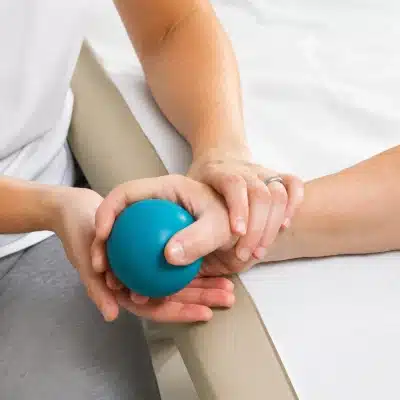
The goal of rehabilitation and therapy is to help the stroke survivor be as independent as possible. Ideally, this is done in a way that preserves dignity and motivates the stroke survivor to relearn basic skills.
These basic skills may include:
- Bathing
- Eating
- Dressing
- Walking
- Communicating
What is a care partner’s role in speech therapy and rehabilitation?
Many people who are helping to care for a person with aphasia ask how they will be involved in speech therapy. The best answer is to ask the speech-language pathologist (SLP)! Your SLP will be excited that you want to be involved in your loved one’s journey.
Plan to attend speech therapy whenever you can. The goals of speech therapy should involve functional, everyday communication. This type of communication probably involves you. If the SLP has an activity meant just for the person with aphasia, they will ask you not to assist or talk. This is most common during a speech and language assessment.
Conversations are a two-person activity, so you are an important part of therapy. Some treatment techniques even focus more on the communication partner than the person with aphasia.
Other tips about how you can participate in speech therapy include:
- Observe what the therapist does even when you’re not involved so you can practice with your loved one
- Help your loved one with aphasia complete any “homework” the SLP recommends between sessions
- Be a coach and a cheerleader between sessions
- Provide a hug or other comfort if your loved one with aphasia is frustrated
- Remind your loved one that aphasia does not define who they are
How can you improve speech after a stroke?
People with aphasia and their care partners often wonder how to improve their speech after a stroke. The most important thing you can do to improve speech following a stroke is to work hard and follow your speech-language pathologist’s suggestions.
During recovery, your brain is rebuilding neural pathways to connect words to their meanings. The more you practice, the better your brain can recover.
Ask your SLP for homework to do between sessions, like:
- Speech activities with your care partners
- Reading and writing exercises
- At-home practice apps, like Talk Path Therapy
If you have trouble with everyday communication, you may try an augmentative and alternative communication (AAC) device, also called a speech-generating device (SGD). These tools combine pictures, written words, and spoken words to help you communicate. It can also help you improve your speech.

Research shows using an AAC device can help improve your speech, even if it means you’re not focusing on speaking. This is because the device gives you a multi-modal input into your brain, which means your brain is getting more ways to relearn to speak. An AAC device also gives you an auditory (spoken) model that you can practice repeating.
No one can say for sure how much you will improve or how long it will take, but there are many strategies that can help. Improvements can continue for years following a stroke, especially with effort, motivation, and the help of an SLP.
How long does it take to recover speech after a stroke?
After a stroke that causes aphasia, most people see the most improvement in speech within the first six months. During this time, the brain is healing and repairing itself, so recovery is much quicker. This is called the spontaneous recovery phase.
For others, the recovery process can be slow. You may have aphasia for many more months or even years. You may also have periods of little to no change, followed by sudden bursts of improvement.
It’s very difficult to predict a timeline for speech recovery. No two individuals with aphasia are the same, which means every recovery timeline or outcome will be different. The type and severity of aphasia will also impact speech recovery time.
There is no cure for aphasia. But with by working hard, going to speech therapy, and engaging in life activities, you can continue to improve your speech and communication for many years after a stroke.
What are common concerns after a stroke or brain injury?
After a stroke or brain injury, you may face many challenges. Every survivor is unique and may have different impairments. Most are common and will improve with time and rehabilitation.
You may have some of the following issues:
Physical conditions
- Weakness, paralysis, and problems with balance or coordination
- Pain, numbness, or burning and tingling sensations
- Fatigue, which may continue after a person returns home
- Inattention to one side of the body, also known as neglect; in extreme cases, you may not be aware of your arm or leg
- Urinary or bowel incontinence
- Difficulty swallowing
- Memory problems, poor attention span, or difficulty solving problems
- Visual problems
- Difficulty recognizing limitations caused by the stroke

Communication challenges
- Difficulty with word finding
- Slurred or unintelligible speech
- Difficulty writing
- Trouble using numbers or doing math
- Understanding spoken language
- Trouble following directions
- Difficulty reading
Cognitive problems
- Difficulty maintaining attention
- Memory loss
- Trouble with insight and making judgments
- Disorganization
- Disorientation
- Trouble processing information
- Difficulty with problem solving
- Reasoning
- Difficulty with executive functioning (planning, focusing attention, remembering instructions, and managing multiple tasks successfully)
Emotional and behavioral changes
- Sudden mood changes
- Feeling anxious, worried, pessimistic, or hopeless
- Isolating one’s self from others
- Having thoughts of death
- Loss of energy
- Increase or decrease in appetite
- Difficulty sleeping or sleeping too much
- Difficulty concentrating, remembering, thinking, or making decisions
- Headache
- Digestive problems
- Sexual problems
Talk to your doctor if you or a loved one is exhibiting any signs of depression. They may prescribe antidepressant medicine or a referral to a psychologist or psychiatrist.
How can you prevent a future stroke?
If you’ve had a stroke, you are at a higher risk of having another stroke. According to the American Stroke Association, approximately one out of every four strokes in the US will happen to someone who has already survived one.
The good news is you have the power to help! Understanding the type of stroke your loved one had, along with its underlying cause, can help you create a plan that helps to reduce your risk of future strokes.
- Eat a healthy diet
- Exercise regularly
- Quit smoking (or don’t start)
- Avoid alcohol
- Manage your medications
- Manage other health conditions, such as blood pressure, cholesterol, or blood sugar