Preparing for life after the hospital
Bringing your loved one home after the hospital after a stroke can be challenging. Follow these tips to prepare for life after the hospital.

How can I care for someone who can’t speak after a stroke?
Many people have some difficulty speaking after a stroke. This is called aphasia. Aphasia can also affect the person’s ability to understand speech, read, and write. Caring for a loved one with physical impairments can be very difficult. When you add aphasia to the equation, providing care can become a bit trickier.
If your loved one has trouble speaking after stroke, here are some things you can do to help support their communication:
- Make sure you have the person’s attention before you start
- Be patient and give him or her time to speak
- Resist the urge to finish sentences or offer words
- Minimize or eliminate background noise (e.g. TV, radio, other people)
- Ask yes/no questions
- Speak in a normal voice at normal volume
- Allow the person time to process the information and respond
- Resist the temptation to answer questions for him or her
- Simplify your own sentence structure
- Reduce your rate of speech
- Don’t “talk down” to the person with aphasia (e.g. no “baby talk”)
- Write down keywords as you speak
- Draw pictures to emphasize what you are saying
- Use common, meaningful gestures
- Use visual supports (e.g. pictures on your phone, communication board, yes/no cards)
- Verify that you are both understanding and following the conversation
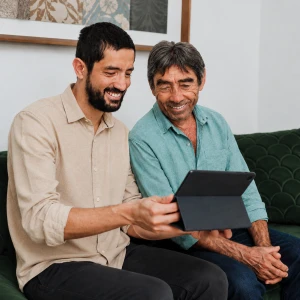
One of the most important things to remember when communicating with a person with aphasia is that aphasia does not affect intellect. We always want to acknowledge that the person with aphasia is a competent adult who has thoughts and ideas to share. The problem is not in their thinking, but in their ability say or produce these ideas and thoughts.
How should I modify my home?
Home modification can make a big difference for you and your loved one after they have suffered a stroke. Even a few minor changes can reduce frustration, increase independence, reduce the risk of falls, and ease their transition back into everyday life.
When thinking about which changes to make around your home, consider your loved one’s activities of daily living (ADLs). These include activities like eating, bathing, grooming, bathroom use, getting out of bed, and so forth. Consider what will make these activities easier for him or her. If you are unsure of where to start, ask your loved one’s occupational and/or physical therapists for recommendations.
Some common home modifications include:
- Doorknob Extenders - Levers that attach to doorknobs without handles and allow a person to open a door by pressing down on the lever
- Tub Transfer Bench – Make transferring into and out of shower easier and safer
- Rails/Grab-bars – Can be installed around the house to aid in balance and provide support when moving around
- Shower hoses – Allow your loved one to bathe more independently if he or she has limited movement and need to sit
- Non-slip bathmats – Help stabilize and prevent falls in slippery tubs
- Night Lights – Illuminate hallways and pathways, especially to the bathroom at night
- Rug Grippers - Non-slip adhesive pads that prevent rugs from slipping out of place
- Raised Toilet Seat or Commode – Allow stroke survivors who experience leg weakness or limited mobility to use the toilet more safely and independently
- Soap Dispensers – Easier for stroke survivors with weakness in one arm (hemiparesis) to used compared to bar soap and squeeze tubes
- Ramps – Both portable and permanent ramps can help your loved one get around the home if he or she uses a wheelchair
- Open Shelves - Allow stroke survivors to see what’s in cabinets without having to open them, and are especially helpful if your loved one has memory problems
- Closet Racks or Rails – Make it easier to store and access clothes compared to when clothes are tucked away in drawers
- Cord Covers – Install cord covers or tape cords down to prevent tripping hazards
- Adaptive Cooking Equipment – Items like nonslip placemats, cutting boards, pot stabilizers, plate guards, rocker knives, and adaptive cutlery will make it easier for your loved one to eat and prepare simple meals
- Remove Locks – By removing locks from doors within the house you will ensure that your loved one will not get locked in a room
- Clear Walkways – By keeping floor and walkways clear of clutter and obstacles, you’ll help prevent falls and make your loved one’s movement around the house easier
What should I know about my loved one’s medications?
After a person has a stroke, they are at a higher risk of having another one. However, medication can reduce this risk. It’s important that a stroke survivor always take their prescribed medication. They should not stop taking a medication or change the dosage without speaking to their doctor.
Sometimes medicines do not work as they are supposed to. Make sure you tell your loved one’s doctor or pharmacist about everything he/she is taking. This includes over-the-counter medicines, natural remedies, and vitamins.
If you are worried or have questions about your loved one’s medications, speak to the doctor or pharmacist immediately. The doctor may be able to make changes to reduce or eliminate any side effects or interactions. They can also organize a medication management review if needed.
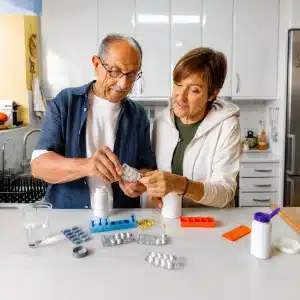
Some common medications prescribed after a stroke include:
- Blood pressure medication (anti-hypertensives)
- Cholesterol lowering medication (statins)
- Blood-thinning medications (antiplatelet or anticoagulant)
Some tips on managing your loved one’s medications include:
- Set timers or alarms to make sure medications are taken the same time every day
- Download an app on your smartphone to remind you to administer medications, refill prescriptions, or get a new prescription
- Keep medications in the same place in your home
- Put medications in a convenient place (bathroom counter, kitchen table, bedside table)
- Use a pill organizer that shows the days of the week and time of day
- Ask your pharmacist to pack medicines into a blister pack
- Keep a list of your loved one’s medications with you at all times in case you need to share them
- When traveling, take enough medication for the full trip
How can I manage incontinence?
About half of stroke survivors admitted to the hospital will experience loss of bladder control, and about a third will experience loss of bowel control. This is called incontinence.
This can be very distressing for both the stroke survivors and their caregivers. For many, it can be a very sensitive and personal issue that causes embarrassment or a loss of dignity.
While many stroke survivors experience incontinence early on, it has been reported that only 15% will continue to have continence problems a year after their stroke.
Speak with your loved one’s healthcare team for more information on treatments to manage their incontinence.
Here are some tips for managing your loved one’s incontinence at home:
- Find the right incontinence products (absorbency pads or pull ups)
- Use washable seat pads to protect furniture
- Use mattress protectors
- Get a commode for easy toilet access
- Plan access to toilets when outside of the home
- Bring a change of clothes and hygiene kit when going out
- Establish a daily toileting routine of regular visits to the toilet
- Wear a silent, vibrating alarm watch to discreetly remind you of toileting routine
- Limit drinks that irritate the bladder and bowels (e.g. caffeine or alcohol)
- Encourage a balanced diet plan with plenty of fiber (e.g. fruits and vegetables)
- Keep your loved one as active as possible to help stimulate bowel movement
- If your loved one has aphasia, establish a way for them to communicate to you when they must use the toilet (e.g. ringing a bell)
- Have your loved one wear clothes that are easier to unfasten and remove (e.g. Velcro, elastic waistbands, etc.)
- Help your loved one practice good hygiene to avoid urinary, bladder, or skin infections
What should I feed my loved one after a stroke?
After a stroke, it can be hard for a person to eat the right foods to get the nutrition they need. Your loved one’s speech-language pathologist, dietitian, and nutritionist will be great resources to ask about healthy and safe drinking and eating after a stroke. The dietitian can also recommend dietary supplements, or meal plans that target specific foods and beverages to ensure your loved one gets the right nutrients.
The following concerns may contribute to poor nutrition following a stroke:
- Swallowing problems – the medical term for this is dysphagia
- Loss of appetite
- Difficulty using dominant arm/hand to drink and eat
- Trouble with memory or thinking clearly

Foods high in antioxidants, potassium, fiber, calcium and folate (folic acid) have been associated with good health after stroke.
It’s a good idea to limit salt, sugar, saturated fats, and alcohol after a stroke.
Always talk to a doctor or dietitian to decide the best diet for your loved one.
How do I deal with post-stroke depression?
Having a stroke is a life-changing event. Many stroke survivors feel a loss of identity, which can lead to distressing feelings about themselves and their future.
After a stroke many parts of an individual’s life can be impacted. A stroke can impact a person’s relationships, their ability to work, their household roles, their finances, and/or their ability to participate in activities.
Due to these changes, many stroke survivors will experience stress, anxiety, and depression. One in three people experience depression at some point during the first five years after their stroke.
It is important for caregivers of stroke survivors to keep a look out for any signs of depression in their loved one. Here are some of the common symptoms of depression:
- Persistent sad, anxious or “empty” mood
- Restlessness and irritability
- Feelings of hopelessness, pessimism, guilt, worthlessness or helplessness
- Loss of interest or pleasure in hobbies and activities, including sex
- Decreased energy and fatigue, and feeling “slowed down”
- Difficulty concentrating, remembering and making decisions
- Insomnia, early-morning awakening or oversleeping
- Appetite and/or weight changes
- Thoughts of death or suicide, or suicide attempts
In addition to affecting a person’s mood, depression can also make the rehabilitation process more challenging. If five or more of these symptoms persist for longer than two weeks, it is recommended that you find a good psychologist or psychiatrist for your loved one. In addition to improving the survivor’s mood, treating depression can boost physical, cognitive, and intellectual recovery.
It is important to note that partners, caregivers, and family members of stroke survivors can experience depression and anxiety as well. If you notice any of these symptoms in yourself, you should also seek help.