My AVM
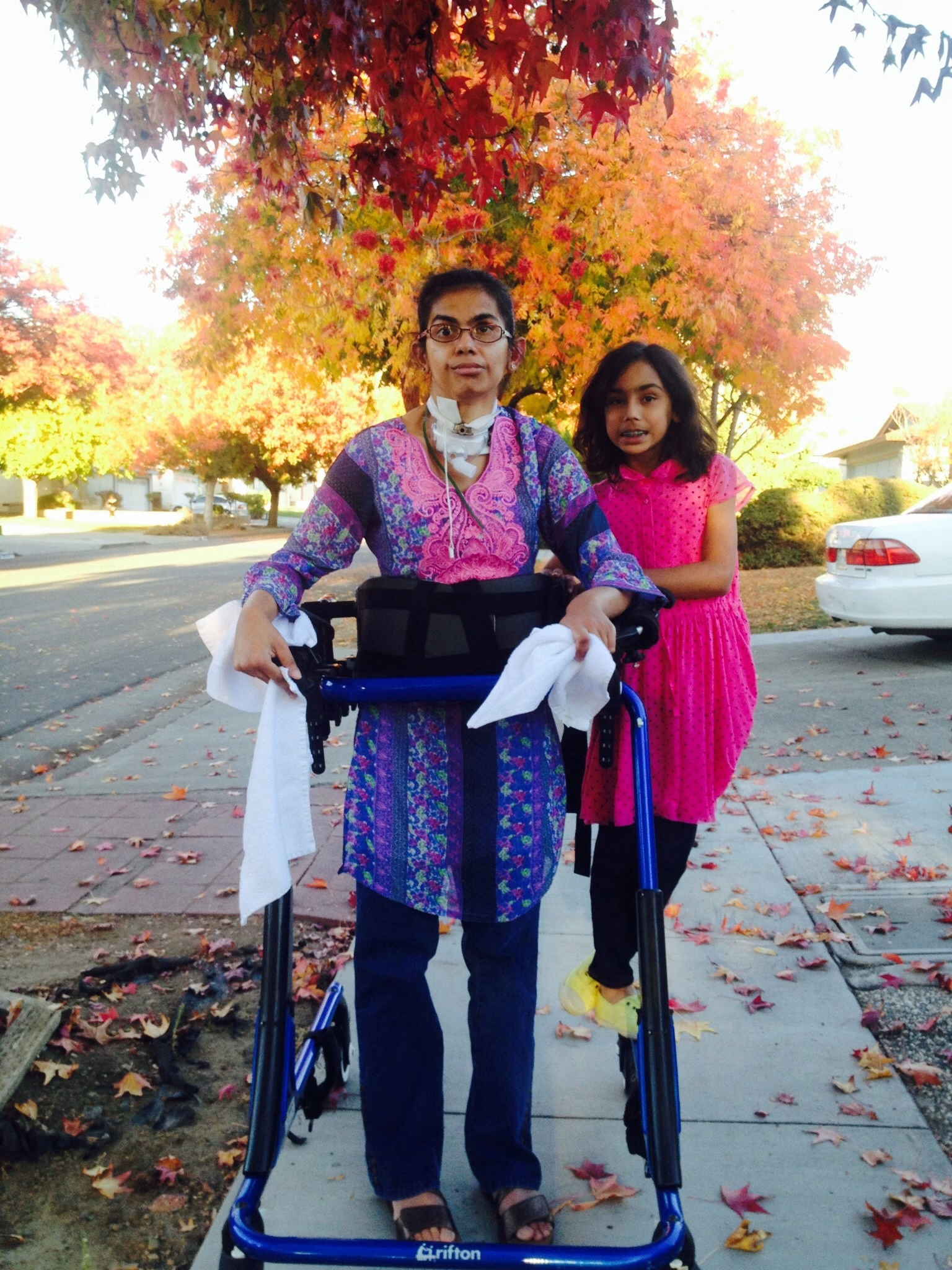
On March 28th, 2004, I had an AVM (Arteriovenous Malformation) on the left side of my brain. This stroke subsequently left my right side paralyzed. This is a story of my journey, starting from when I first felt the symptoms through my assiduous efforts to overcome the physical constraints that the AVM imposed on me.
I was at my brother’s home with some family. I was pregnant with my second daughter and my husband was in Germany.
Suddenly, I noticed that I was unable to hear from one ear, and a headache soon ensued. My mother called my brother, followed by a call to 911. The paramedics diagnosed my condition as morning sickness from pregnancy. However, my sister insisted that it was more than that due to the deafness in one ear. The paramedics eventually took me to O’Connor hospital. Dr. Sarkis came to check on me, and arranged for an EVD ventriculostomy tube to be put in.
We tried but, we could not find room anywhere with on-call neurologists. Eventually, my radiologist figured out a way to get room for me at UC San Francisco.
At UCSF, they took a signature from my elder brother before surgery. My in-laws and other family members were contacted before the papers were signed.
My family came to support me. The brain surgeons had no hope for me, and predicted that I was going to die due to the lack of responsiveness. They further suggested that we avoid surgery due to quality of life concerns. My sister observed that my fingers were moving and my heart rate was going up as she was talking about my daughter Sana. She convinced the surgeons that there is still some hope. Fortunately, the neurosurgeon, Dr. Lawton is considered as one of the best. The surgery was a success.
The second surgery is carried out. In the second surgery, the Tracheostomy is placed and a second tube is put into my brain. More relatives come to see me. Later, I needed a Shunt to drain accumulated fluid in my brain spaces to my abdomen. The AVM caused a scar in my left eye that led to limited vision in it. I remained at UCSF for an additional two months before shifting to Valley Medical Center. I stayed at Valley Medical Center for three months before finally returning home.
While I was at Valley Medical Center, my water broke. On June 15th, 2004, Aishah, the miracle baby was born. Born at 23 weeks and 4 days, she was the size of an adult hand. Against all odds, she survived.
At home, I was bedridden. Communication was a major obstacle. It took me hours to express that I wanted the fan on. My mother and husband demonstrated an incredible conviction to improve my quality-of-life and encourage me on my road to recovery.
I never realized the essence of the role of my voice until I lost the ability to vocalize my thoughts. They afford us the simple luxury express our thoughts and exchange experiences with each other. The loss of my voice was exacerbated by my comma, during which I lost touch with the ability to communicate effectively. The mental training I h